Understand the European rules, sector texts and product families to monitor, without confusing an indicative timeline with an applicable obligation.
Updated on 4 August 2026.
Who sets the rules?
The Digital Product Passport is not defined by a single source. The regulation sets the principle, then texts, methods and standards make it applicable by sector.
ESPR
ESPR means Ecodesign for Sustainable Products Regulation: it is the European regulation setting the framework, information duties and passport logic.
Delegated acts
They will specify requirements by product family, expected data and access levels. Under ESPR, adoption is followed by a transition period of at least 18 months.
Harmonised standards
Since 15 July 2026, six European references cover data exchange, identifiers, carriers, archiving, APIs and interoperability. Two additional references remain announced.
EU Registry
Operational since 20 July 2026, it indexes mandatory identifiers and metadata. Detailed content remains hosted by the economic operator or a DPP service provider.
Product verticals to monitor.
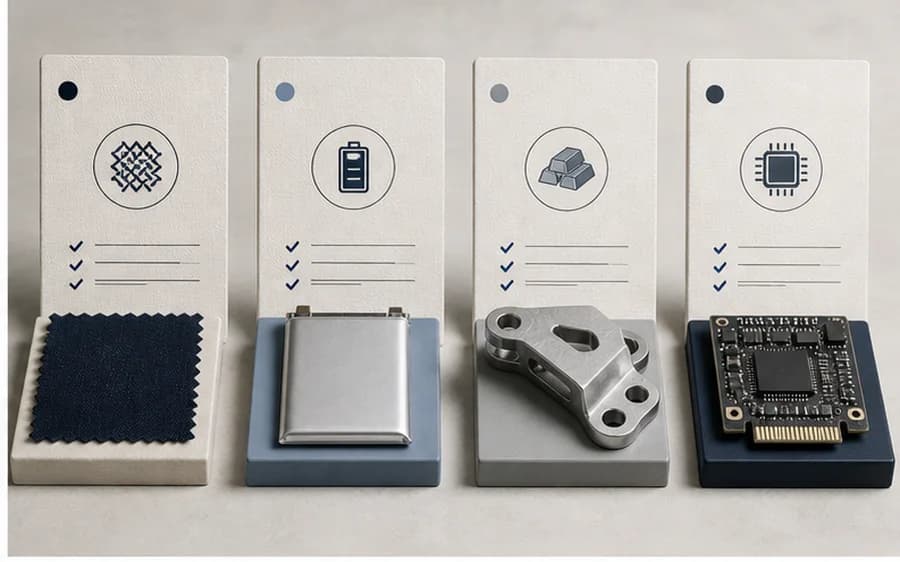
Each vertical brings different evidence: composition, origin, repairability, marking, traceability or supplier documents.
Dated obligation
Batteries
Monitor
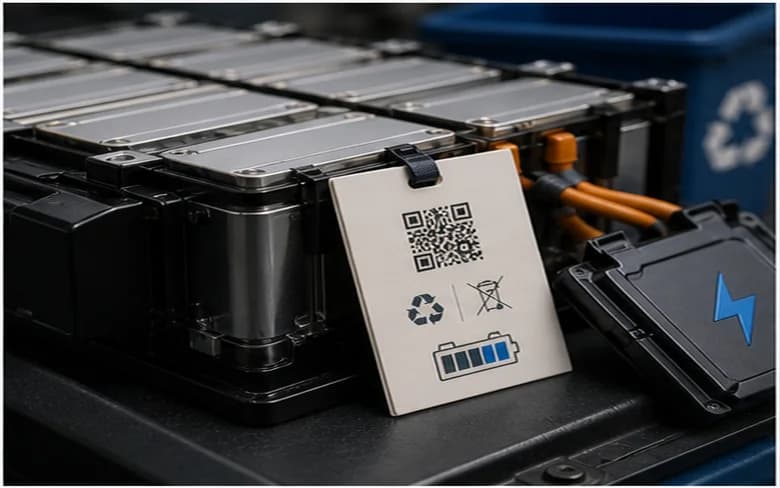
The battery passport is planned for 18 February 2027 for light means of transport batteries, industrial batteries above 2 kWh and electric vehicle batteries.
First move
Verify in-scope categories, product model and already available data.
Act targeted for Q3–Q4 2027
Textiles and apparel
Monitor
The Commission's DPP timeline indicatively targets this period. Footwear is subject to a dedicated study to be completed by the end of 2027 and should be monitored separately.
First move
Audit materials, composition, origin, supplier evidence and customer-facing information.
First sector acts to monitor
Iron, steel and aluminium
Monitor
The indicative timeline targets iron and steel in Q4 2026, followed by aluminium in Q3 or Q4 2027. Application will follow the relevant transition periods.
First move
Identify material sheets, batches, suppliers, origin evidence and links with components.
Horizontal measures to monitor
Electronics and energy-related products
Monitor
The ESPR plan includes energy-related products and horizontal measures. ICT means information and communication technologies, a perimeter to monitor for connected products.
First move
Prepare repairability, spare parts, technical documentation and end-of-life data.
Frameworks separate from ESPR
Packaging and other sector legislation
Monitor
The PPWR follows its own timeline. Construction products, toys, detergents and end-user surfactants also have DPP mechanisms under sector legislation, without one uniform immediate application date.
First move
Identify the legislation applying to the product before defining data, marking and the access carrier.
Indicative 2027-2029 adoption
Tyres, furniture and mattresses
Monitor
The ESPR working plan lists these families in upcoming delegated-act cycles, with detailed requirements still to be specified.
First move
Monitor sector acts and prepare durability, repairability, composition and material data.
Regulatory timeline.
Useful milestones to track published texts, upcoming deadlines and the product verticals to prepare first.
Published textMilestone to monitorProduct deadline
The ESPR enters into force
The regulation establishes the European framework for ecodesign requirements, product information and the Digital Product Passport.
First ESPR working plan
The Commission publishes 2025-2030 priorities: iron and steel, aluminium, textiles and apparel, furniture, tyres, mattresses, energy-related products and horizontal measures.
Construction products and materials
The Construction Products Regulation becomes broadly applicable and the CPR 2026-2029 working plan organises work by families: concrete, mortars, aggregates, masonry, facades, floorings, construction kits or prefabricated elements. The construction DPP will then depend on a delegated act and the relevant harmonised specifications.
Standards published and DPP Registry operational
The Commission publishes six harmonised standard references, adopts the Registry arrangements and then brings it into operation. The Registry stores mandatory identifiers and metadata while detailed product data remains decentralised. Two further standards are indicatively announced for September 2026.
Packaging: general PPWR application
The European Packaging and Packaging Waste Regulation generally applies from this date, with possible impacts on marking, sorting, material evidence and information to keep.
Iron, steel and energy-related products
The Commission's DPP timeline indicatively targets Q4 2026 for the iron and steel delegated act. Energy-related products follow several waves through the end of 2030. These dates concern adoption of the acts, followed by an ESPR transition of at least 18 months, rather than immediate DPP application.
Battery passport
LMT, industrial above 2 kWh and electric vehicle batteries placed on the market or put into service will need a battery passport.
Textiles and apparel
The Commission's indicative timeline targets this period for ESPR requirements on textiles and apparel. Material, origin, repairability and supplier evidence data become priority preparation work.
Tyres and aluminium
The Commission's indicative timeline also targets this period for ESPR acts on tyres and aluminium. Manufacturers can already isolate composition, batches, material origin and technical documentation.
Footwear and horizontal requirements
The plan mentions a specific study for footwear and cross-cutting requirements such as repairability. Final choices should be monitored through delegated acts.
Furniture and mid-term review
Furniture and furnishing products are among the indicative ESPR priorities, with targeted adoption in 2028. A mid-term review should also help adjust priorities before the end of the 2025-2030 cycle.
Show more dates, 4 additional datesShow less
Mattresses and electrical equipment
The plan mentions mattresses and a horizontal measure on recycled content and recyclability of electrical and electronic equipment. Some ICT products remain tracked within energy-related products.
Final waves of the ESPR plan
Energy-related products and horizontal measures should continue to take shape. Applicable dates will depend on the texts adopted for each family.
Packaging: recyclability and material targets
The PPWR aims for packaging to be recyclable in an economically viable way by 2030 and strengthens recycled-content, reuse and waste-reduction requirements. This milestone remains separate from the product DPP, but it structures the packaging data to prepare.
Sector rollout scales up
The 2025-2030 plan is designed to bring together product requirements, data, access carriers and interoperability for priority families.







 Dated obligation